

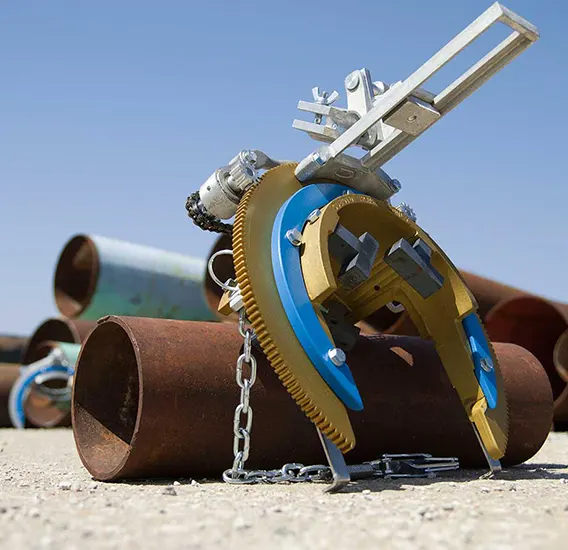
Pipe grinding is one of the most crucial steps in the metal fabrication, construction, automotive and industrial manufacturing processes. The ground pipe should be smooth, uniform in size and edges should be clean. However, there are several issues that operators may encounter while grinding, particularly if the incorrect abrasive, machine setting or technique is applied. Awareness of these common problems will help to enhance productivity, minimise waste of materials and ensure good finishing quality.
1. Uneven Grinding
One of the most common pipe grinding problems is an uneven or inconsistent finish. There can be some very dense ground and some very rough or unmixed ground. This is typically due to low or high pressure, positioning of the machine, or the wrong grinding wheel.
Solution:
Apply even pressure and move grinding tool through pipe surface in a uniform manner. Use the correct abrasive wheel for the pipe material, and ensure that the machine is correctly set up before use.
2. Excessive Material Removal
Too much material removal will alter the pipe size and affect the structure. This is a problem of special importance for precision components where dimensional accuracy is critical.
Solution:
Do not do too much pressure and to use the correct grinding speed. Do multiple controlled passes; don’t attempt to get the desired finish in one aggressive pass. To prevent over-grinding, it is important to check the diameter of the pipe regularly.
3. Overheating and Discoloration
The grinding process is accompanied by heat, especially when using stainless steel and hard metals. Can result in discoloration, surface damage, or changes in material properties with excessive heat.
Solution:
Follow the recommended grinding speed, and do not store the abrasive for an extended period at the same site. Heat can be controlled by proper ventilation and by appropriate cooling techniques. A high quality abrasive, appropriate for the material, can also help minimize heat generation.
4. Grinding Wheel Wear
The grinding wheel wears down slowly during the grinding process. If the wheel is worn or damaged, it can result in poor finishing, vibration and reduce efficiency of grinding.
Solution:
Check grinding wheels periodically for cracks, glazing and wear. Change them out if they are not performing consistently. Never exceed the manufacturer’s requirements for wheel type, size and max operating speed.
5. Excessive Vibration
Vibration may make it hard to get a smooth finish and can leave unwanted marks on the pipe. It may be caused by a setup error, machine imbalance, worn parts or incorrect operating parameters.
Solution:
Before grinding, ensure that the pipe is properly positioned. Inspect grinding wheel and machine components for damage or imbalance. When vibration persists, check bearings, mounting systems, and machine alignment.
6. Burrs and Sharp Edges
Sharp edges and burrs may be left around the ends of pipes after cutting or grinding. These can lead to safety problems and can cause the welding, assembly or subsequent fabrication to be affected.
Solution:
Deburr and edge finish after grinding with suitable technique. The smoothness of the pipe’s finishing supports the subsequent manufacturing stages and enhances the appearance of the finished product.
7. Poor Surface Finish
Occasionally a pipe can look like there are scratches or rough spots in it, or it can look like its diameter is uneven. This may be attributed to the improper abrasive grade, pressure and contaminated grinding equipment.
Solution:
Select the abrasive grain and grit size for the finish desired. Generally coarser abrasives will work best for heavy material removal, and finer abrasives for finishing. Ensure surface contamination is avoided by keeping grinding equipment clean.
When selecting a grinding equipment, it is important to consider the following factors:
A good quality grinding process relies greatly on the choice of suitable machinery. When selecting equipment, businesses need to take into account pipe diameter, material, production volume, surface finish and automation. Manufacturers can make informed decisions about the equipment needed for their production processes by collaborating with a trusted Pipe grinding machine supplier in UAE.
There are a number of processes used for pipe fabrication that are not just grinding. A Pipe Bending Machine can be crucial for the production line for applications that require curved or formed pipes. It can be beneficial for manufacturers to have accurate bending combined with controlled grinding to reach better dimensional accuracy and a cleaner finished product.
Conclusion
Some of the typical pipe grinding issues, including uneven finishing, overheating, excessive material removal, vibration, wheel wear, burrs, and surface scratches can be a significant impact on the production. Most of these problems can be eliminated by using the correct machine settings, abrasives, maintenance and operator techniques.
Having the right machine in the hands and the appropriate equipment for the job can lead to safer, faster and more consistent pipe processing. In the UAE, industrial metal fabrication firms can work with a trusted Pipe grinding machine supplier and choose the right complementing machine like Pipe Bending Machine to optimize the production process and ensure reliability.