

From cartons and packaged goods to metal parts, industrial parts, and heavy equipment, warehouses throughout Saudi Arabia store a variety of materials. Safe and efficient movement of these materials is critical to the smooth function of operations. By selecting the appropriate material handling equipment businesses can decrease the amount of manual work required, safeguard products, and enhance the productivity of the warehouse.
But which equipment is suitable for your warehouse? It is dependent on the nature of the materials you manage, the accessible space available, lifting needs and the frequency of items moved.
If you’re a warehouse manager seeking to optimize everyday operations, you need to know all these factors before you make a smart investment.
Importance of Material Handling Equipment in Warehouses.
Material handling equipment can aid employees in lifting, moving, positioning and transporting materials in a more controlled manner. Repetitive lifting and improper working postures can lead to worker fatigue and injury if not properly equipped.
Saudi Arabia’s logistics, manufacturing and construction and industrial supply chain warehouses can benefit from the equipment built to meet their handling requirements.
The most significant advantages are:
- Minimized manual lifting and physical workload.
- Quick loading and unloading and product moving.
- Improved control when handling heavy or fragile objects.
- Better workflow and warehouse utilization.
- Reduce product spoilage and work hazard.
The ideal solution should be more efficient, but not put the worker at risk.
1.Consider the Type and Weight of Materials
The first step in identifying your warehouse’s daily requirements is to determine what you have in your warehouse. There are many things that are packaged in lightweight cartons, heavy components on machinery, metal sheets and heavy packages, all of which are handled differently.
For instance, pallet trucks or forklift trucks can be used to move palletised goods and specialised lifting equipment can be used for materials that are not easily handled or positioned by hand.
Examine the weight, size, form and texture of the materials prior to choosing equipment. Also take into account the height of objects to be lifted and the need for rotation or correct placement.
When loading the equipment, the same gear is used to match to the load to get the best handling performance and safety.
2. Select Equipment for Your Warehouse Layout.
Space is a critical factor in equipment choice when considering warehouses. There are so many conditions that come with narrow aisles, high storage racks, loading areas and busy packing stations.
A forklift could be helpful for moving heavier loads that are palletised, and compact handling solutions may help with repetitive tasks in smaller workspaces.
Check floor state, ceiling heights, ceiling movement and aisle width prior to equipment purchased. Ensure that workers and equipment have free access to work.
Specific material handling solutions can help optimise space and streamline workflow where lifts and positioning are a frequent occurrence in warehouses.
3. Think about using Vacuum Tube Lifters for repetitive lifting.
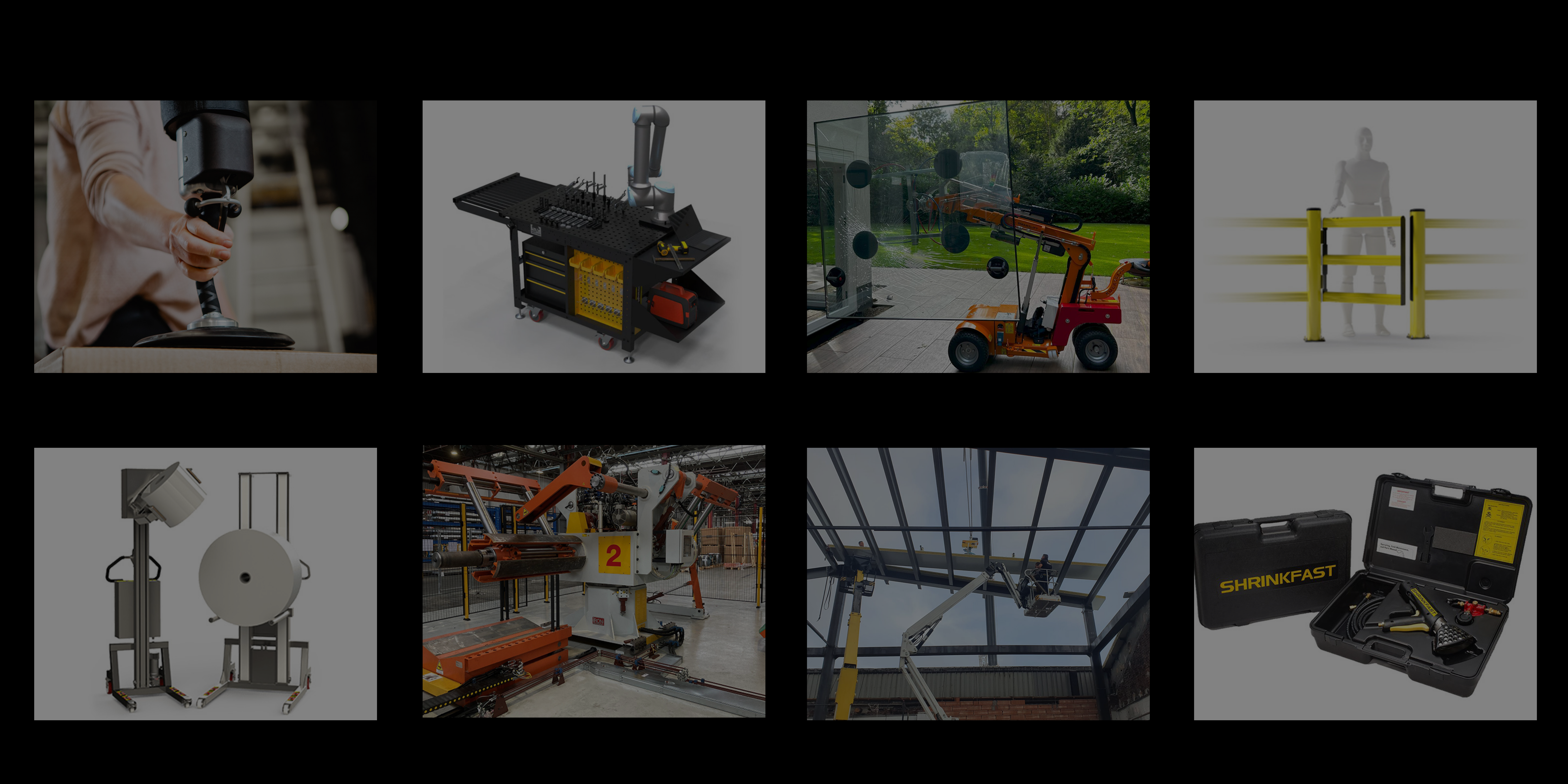
In a scenario where cartons, bags, boxes and other appropriate packaged materials are moved frequently in a warehouse, a vacuum tube lifter can be a practical option.
These systems are designed to pick up and transport compatible loads with a vacuum grip, reducing the amount of manual effort required by the worker. They can be very helpful in packing and loading and unloading procedures, as well as stocking and sending orders, where the same lifting operation is performed on a daily basis.
A vacuum tube lifting system for example, can be used in the warehouse industry for a worker who constantly moves cartons from a pallet to a packing station.
Prior to selecting one, you should ascertain the maximum load capacity, packaging surface, suction compatibility, as well as lifting frequency. The system should be appropriate to the actual material to be handled.
4. When to Use Industrial Manipulators?
industrial manipulators are intended to enhance an operator’s ability to lift, move and position loads with increased control. Depending on their setting up they can help to perform functions such as turning and tilting, or precisely positioning component.
They can be beneficial in industrial warehouses, especially where manufacturing or assembly processes frequently involve handling heavy, awkward or hard-to-position items.
For example, a facility with multiple metal parts to be moved from storage to a workstation in a manufacturing process can make use of an appropriate manipulator.
The model to be chosen will vary with load weight, reach, movement needs, installation space and gripping attachment necessary.
5. Assess Safety, Maintenance and Operating Costs
Purchase cost can’t be the only factor in equipment selection. Consider installation, operator training, maintenance, spare parts and long-term operating costs.
Ensure equipment has a suitable rated capacity and ensure workers are trained on the safe use of its equipment. Establish routine inspection and maintenance schedules, and keep warehouse aisles clear.
Saudi warehouse operators must also check the local requirements for occupational safety, as well as equipment standards, before installation and use.
If the plant system is properly designed and maintained, it will be able to perform its function over a period of time.
What is the best way to select the best Material Handling Solution?
The best way is to evaluate your daily operations before deciding. Determine the objects being lifted, how often they must be lifted, how much movement is necessary and what is available.
Standard transport equipment can be used for movement of pallets in general. Vacuum tube lifters can be considered for repetitive carton lifting. Industrial manipulators might be a better option for handling large and cumbersome industrial parts.
Fenatek Saudi Arabia offers material handling solutions to industrial applications. Businesses can consider the appropriate options for their warehouse needs, load types and objectives.
Conclusion
The selection of the right material handling equipment begins by understanding the job that has to be accomplished in Saudi warehouses. The decision should be based on load capacity, warehouse configuration, the frequency with which the forklift is used to lift loads, the workers’ safety, and maintenance needs.
Vacuum tube lifters and industrial manipulators are useful for specific lifting and positioning situations, which can be used in warehouses to cut down on the amount of manual labor needed when these systems make sense.
A thorough examination of operational requirements will enable warehouse managers to choose sensible material handling solutions that can facilitate safer, more efficient and productive warehouse operations.